


The Pressure To Have It All Figured Out
- Maria Youssef
- Mar 12
- 4 min read
Ever been asked at 16 or 17 what you wanna do forever? Not just what classes you dig or what you do for fun, but your career, where you’re going to go to college, and what your life will be like down the road. For a lot of teens, it’s not just a one-off question—it’s constant. It’s a huge stress to have it all figured out, like you’re supposed to have some perfect life plan before you’ve even started to become an adult.
This is tough because teens’ brains are still developing, and they are still trying to figure out how to deal with stress, emotions, and making choices. They’re trying to make huge life decisions while still figuring out who they even are. The worry about picking the wrong thing or not having a plan at all can turn into constant anxiety and self-doubt. And over time, this gets into their head, messes with their emotions, and even affects them physically (Pascoe, Hetrick, & Parker, 2020).
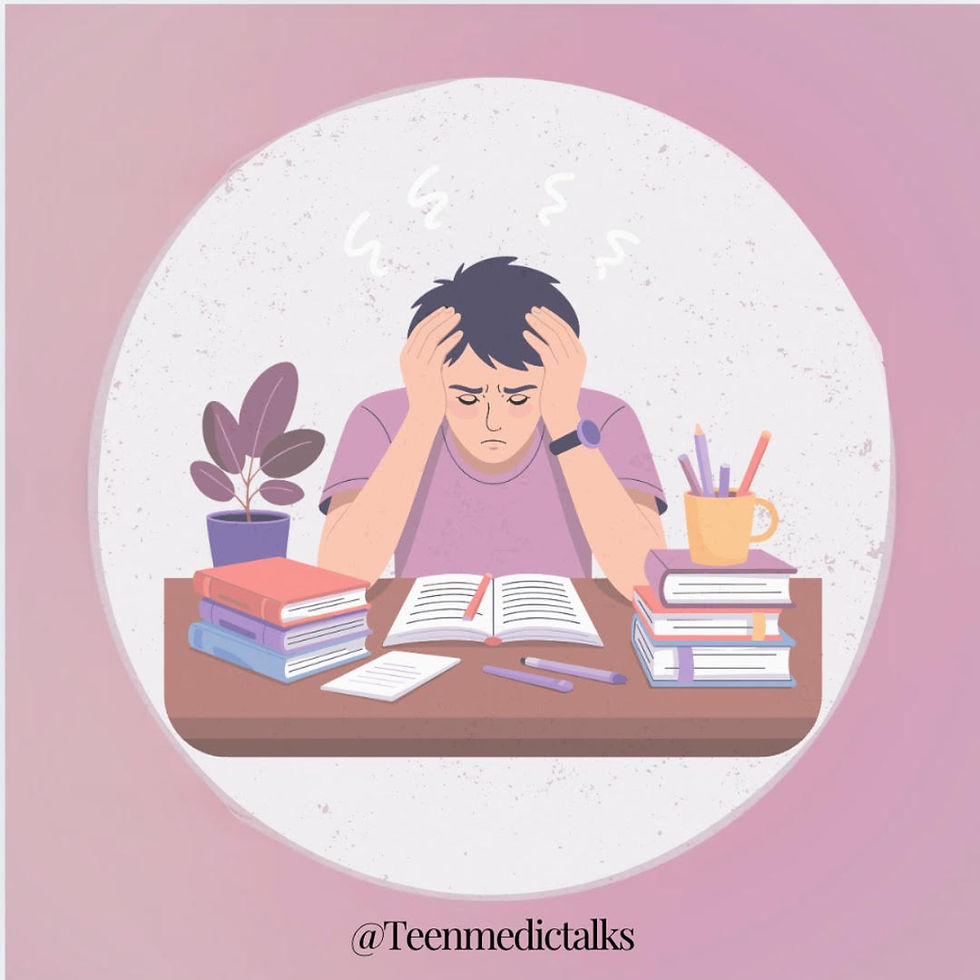
These days, school stress isn’t just about grades. Students are now expected to have their entire career path mapped out early, too. Some end up feeling like their worth is tied to their GPA and accomplishments (Guzmán, Espinoza, & Vizcarra, 2023). When you feel like you’re only as good as your performance, not knowing what you wanna do can feel like you’re failing, big time. Students don’t just worry about the next test; they worry about how every single grade will impact getting into college and how that college will shape their entire future. This makes everyday schoolwork feel like this crazy, high-stakes situation.
And it gets worse with what everyone else is doing. Students are around peers who always have something to say about their test scores, their dream school, scholarships, and what they wanna do. It makes people compare a lot, measuring their own value based on the success of others (Herbstrith & Latzko, 2022). When everyone else seems to have it all together, it’s easy to feel like you’re behind. Instead of doing their own thing, teens start judging themselves based on someone else’s timeline, and it leads to feeling not good enough.
Family expectations also play a big part. A lot of families see doing well in school as your job. Students feel like failing would disappoint their family. That fear of letting people down can feel even more difficult than the schoolwork itself. This puts pressure on them, and the focus is no longer on something they love to do, but rather something that others want them to do (Rizwan, Talha, & Qi, 2020).
Worrying about what could go wrong and the mistakes you might make leads to anxiety, almost like putting your brain in survival mode. Headaches, tiredness, tense muscles, stomach problems, and trouble focusing often follow (Pascoe, Hetrick, & Parker, 2020). Instead of relaxing, teens find their minds racing, which, if the stress continues without relief, can eventually result in depression. After a while, students may start believing they will never be good enough, becoming discouraged about who they are and losing motivation for activities they once enjoyed, like school, hobbies, or spending time with friends. Teens will no longer have that excitement in their lives but will just be tired. The fun of learning gets replaced with fear.
But the good thing is, teens don’t have to deal with this on their own. It's important to reach out for help instead of focusing excessively on achievements. It’s okay to not know everything and to make mistakes, it’s part of growing up. Helpful things can be just trying to be present, looking at things differently and focusing on how far you’ve come, not just on being perfect. Support from school counselors, teachers, family encouragement, and peer groups can help students feel supported (Guzmán, Espinoza, & Vizcarra, 2023).
Wanting to have everything figured out during the teen years can really mess with people, both in their heads and bodies. School expectations, comparing yourself to others, and family pressures all add up to anxiety, stress, and sometimes even depression. Teens are often asked to plan their lives out before they even know who they are. When students realize it’s okay to not know everything, they can start finding what they’re interested in instead of being scared of the future. School is important, but taking care of a teenager’s mind is just as important.
Works Cited:
Guzmán, B., Espinoza, L., & Vizcarra, M. (2023). Academic stress as a predictor of mental health in university students. Cogent Education, 10(2), Article 2232686. https://doi.org/10.1080/2331186X.2023.2232686
Herbstrith, L., & Latzko, B. (2022). Social comparison effects on academic self-concepts—Which peers matter most? Frontiers in Psychology, 13, Article 928138. https://doi.org/10.3389/fpsyg.2022.928138
Pascoe, M. C., Hetrick, S. E., & Parker, A. G. (2020). The impact of stress on students in secondary school and higher education. International Journal of Adolescence and Youth, 25(1), 104–112. https://doi.org/10.1080/02673843.2019.1596823
Rizwan, M., Talha, M. A., & Qi, X. (2020). Cultural impact of perceived parental expectations on students’ academic stress. Annals of Social Sciences and Perspective, 1(2), 53–65. https://doi.org/10.52700/assap.v1i2.25
Comments